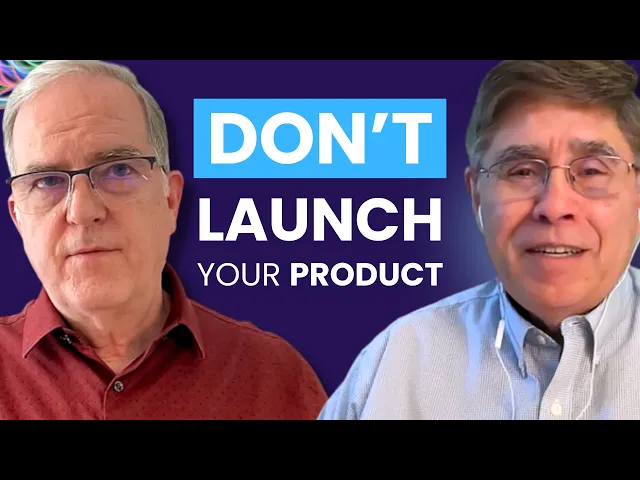
De-Risk and Master Phase Zero | Aaron Joseph & Russ Singleton
Medtech veterans and co-authors/thought leaders Aaron Joseph (Sunstone Pilot) and Russ Singleton unpack “phase zero on steroids”—the disciplined, pre-development work that de-risks science, validates real jobs-to-be-done, and sets your regulatory and reimbursement strategy before you write a line of code. Expect war stories, practical frameworks, and the permission to cancel projects early (that’s a win).
Most early-stage device teams rush into development and end up paying for it in rework, delays, or regulatory dead ends. In this episode, I chat with Aaron Joseph—principal consultant at Sunstone Pilot—and Russ Singleton—results-driven medtech executive and company builder. Aaron and Russ show you how to run Phase Zero on Steroids: a lean but rigorous front-end process that (1) nails user jobs-to-be-done, (2) de-risks the science with targeted experiments, and (3) designs a clear regulatory, reimbursement, and adoption path before design controls start.
You’ll learn why a two-ear team (market + technology) must lead customer discovery, how to set kill criteria and pivot early, why version 1.0 should establish a regulatory baseline (not the kitchen sink), and how to navigate the four buyers in hospital systems. We also cover cautionary tales—from Swiss-army-knife products that stalled to companies derailed by ignoring FDA realities—and practical moves you can make this week to raise your odds of launch success.
Three Tactics to Make Your Phase 0 Worthwhile
Russ and Aaron have three key takeaways for your med-tech journey pre-development, all with the promise of reducing headaches when executed properly.
Front-Load Truth, Not Features.
Begin Phase Zero by naming the job-to-be-done in one plain sentence and testing it with a representative set of users—not just top-5% surgeons. Pair a market-ear with a technology-ear in every interview to capture both desirability and feasibility. Write down kill criteria (technical, clinical, regulatory, economic) you’ll honor. If you hit them, pivot or stop. Canceling early is a success that preserves runway.
Make Science a Workstream with Exit Gates.
Treat unknowns like experiments: define the question, the method, the success threshold, and the next decision. Time-box these studies and document what you learn so results flow directly into design inputs. In parallel, map regulatory strategy (e.g., 510(k) vs PMA), evidence requirements (clinical/usability/electrical safety/sterilization), and reimbursement hypotheses. Often the fastest market path is a tight v1.0 with limited indications that establishes a regulatory baseline.
Design for Adoption Across Four Buyers.
You’re not just convincing a clinician—you’re convincing a system. Quantify switching costs and plan proof that speaks to (1) the user, (2) the hospital/economic buyer, (3) the payer/reimbursement gate, and (4) internal champions. Build your go-to-market around early centers that match your first winning application, then expand indications. Keep Phase Zero lean but funded: small, passionate core team; targeted outside experts; a 5-page plan that a VC—or your own GM—can say yes to.
Want help turning messy early insights into a crisp strategy, message, and launch plan? Bring in a Fractional CMO. https://meshagency.com/fcmo-fractional-cmo-fractional-marketing/
Follow Bill: / founderandcdo
Contact Bill: https://meshagency.com/lets-connect/
Video Podcast: / @billschickfcmo
Audio Podcast: https://www.buzzsprout.com/2380430
Follow Aaron: / ajosephprofile
Follow Russ: / russellsingleton